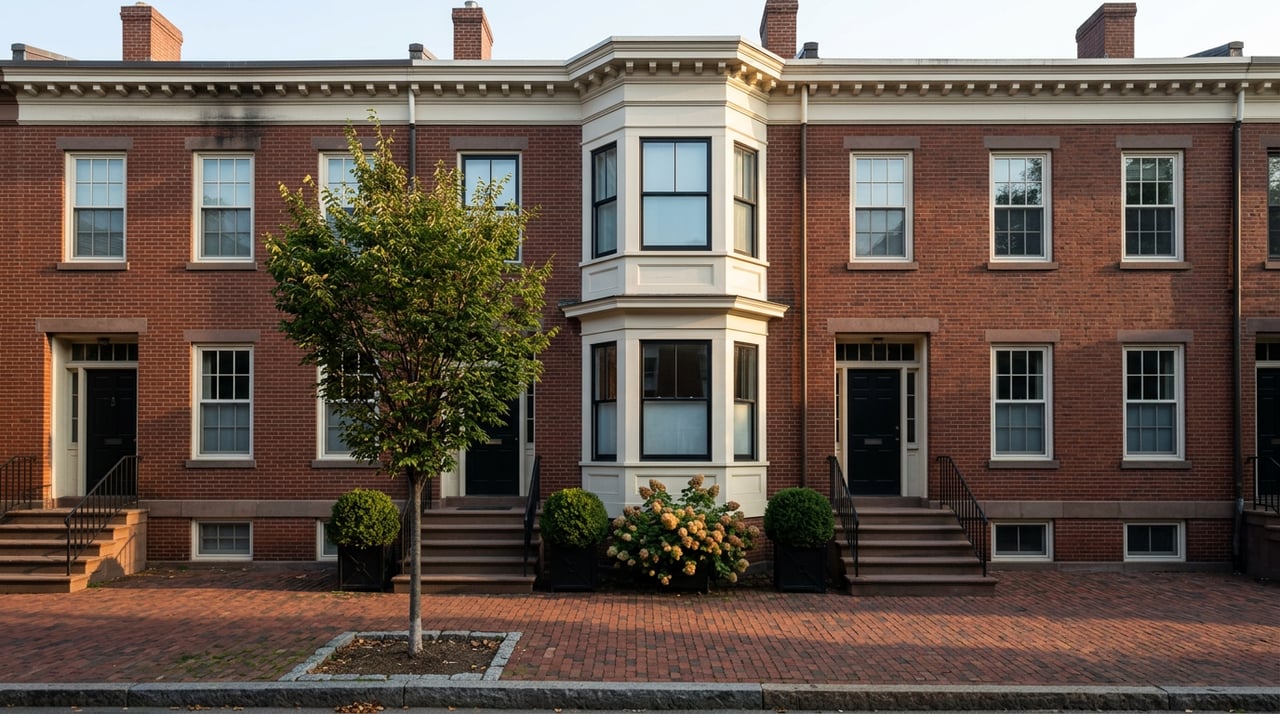
On a Tuesday morning in late August, the regulars are still doing laps at the William H. Rumsey Aquatic Center on North Carolina Avenue SE, the same eight-lane pool that has been open since 1970. A few blocks away on 8th Street, contractors are finishing out the space that used to be Joey's, getting a smoker and a dining room ready under a new name. Neither project has anything to do with the other on paper. Zoom out and they tell the same story: the blocks immediately around Eastern Market are cycling through an unusual amount of change at once, and almost none of it is happening in isolation from the market itself.
That is the thing worth understanding if you live in this pocket of Capitol Hill right now. Eastern Market has functioned all year less like a produce hall with a side of crafts and more like the neighborhood's actual civic room, the place where decisions about the pool, the plaza, and the corridor get argued out before they show up on the street. Here is what is actually changing, and why so much of it keeps circling back to the same building.
The Pool Nobody Wanted Touched Is Finally Getting Fixed
Rumsey opened in 1970 as the Capitol East Natatorium, the city's first year-round, racially integrated public pool, and it was later renamed for Dr. William H. Rumsey, the former DC Department of Parks and Recreation director who co-founded the Black History Invitational Swim Meet. It still runs on that original footprint at 635 North Carolina Avenue SE, right beside the market, with hours that as of this month hold at 6 a.m. to 9 p.m. weekdays and 10 a.m. to 5 p.m. on Saturdays.
That is about to change. On July 22, the city presented what officials called residents' last real chance to weigh in before the design heads into permitting. The plan, drawn up by iStudio Architects, replaces the pool's heavy concrete shell with three connected brick volumes meant to read as part of the Capitol Hill Historic District rather than apart from it. Inside, there will be two separate pools instead of one, an eight-lane lap pool and a smaller pool with a zero-entry ramp, each on its own heating system so lap swimmers and water-aerobics classes stop fighting over temperature and space. A second floor adds an observation deck, a multipurpose room, two community rooms, and a fitness room.
None of that came free, and none of it came automatically. The project started as a $25 million renovation. After Ward 6 Councilmember Charles Allen pushed back on an initial one-story design that dropped the promised second floor, the city found the money to restore it, and the budget rose to $37 million. The final design now on the table carries a $44.5 million price tag, making it the largest Department of Parks and Recreation project currently underway in Ward 6.
Not everyone left the July meeting satisfied. Regulars in the popular water-aerobics classes argued that too little of the new pools would be shallow enough to stand in, and some raised concerns that the new locker rooms, seven showers for women, six for men, plus two family or assisted rooms, would still not be enough for the size of the classes that already fill the space. Those fights are still live. What is settled is the timeline: construction is expected to begin this fall, and past estimates put the demolition and rebuild at roughly a year and a half. If you swim laps here on a regular schedule, that clock is now running, and this may be one of the last stretches of normal access before the fencing goes up.
The Market's North Hall Has Been Doing Double Duty
Here is the detail that ties the pool story to everything else on this list. Every one of those Rumsey meetings, the January design reveal, the July design finalization, happened inside Eastern Market's own North Hall at 225 7th Street SE, the same room the market rents out for private events on other nights of the year. The Eastern Market Community Advisory Committee, ANC6B, and Barracks Row Main Street all weighed in with letters and testimony along the way, and the market's alley itself is being redesigned as part of the pool project, turned into a lit, pedestrian-friendly promenade that opens toward the market rather than running behind it as dead space.
In other words, the market isn't just adjacent to the neighborhood's biggest infrastructure fight of the year. It is where that fight has been getting settled, meeting by meeting, for the better part of eight months.
Down The Block, The Storefronts Keep Turning Over
Barracks Row, the five-block commercial stretch of 8th Street SE that runs from Pennsylvania Avenue down toward the Navy Yard, is having its own churn. If the timeline holds, Federalist Pig, a sister concept to restaurateur Steve Salis's original Adams Morgan barbecue spot, opens around Labor Day 2026 at 527 8th Street SE, the former home of Joey's.
At the same time, the corridor is in the middle of a genuinely contested zoning fight. Wingstop has filed for a special exception to open at 406 8th Street SE, directly across from a Popeyes that is already approved to open, and the block already carries & Pizza, Ledo Pizza, Boli Pizza, Dunkin, Chipotle, and Maman Joon Kitchen. A Starbucks on that same block closed last September, and a 7-Eleven closed in August 2024. Some neighbors have circulated a petition asking for a moratorium on new fast-food and cannabis permits, arguing the corridor is saturating on quick-service food at the expense of everything else. The zoning rule that governs this is narrower than it sounds: a fast-food applicant only has to show the Board of Zoning Adjustment that the business will not create problems with trash, noise, odors, or traffic, which is one reason approvals keep clearing even when neighbors object.
Whichever way that fight resolves, the practical effect for anyone walking Barracks Row this fall is a corridor that is simultaneously losing a longtime coffee stop, gaining a barbecue restaurant with some ambition behind it, and absorbing yet another round of quick-service chains.
Groceries Got A Refresh, Too
A few blocks off the market, Mott's Market held its grand reopening on August 11 at 233 12th Street SE, celebrating a renovated back patio alongside its usual lineup of groceries, coffee, sandwiches, wine, and cafe service. It is a smaller footprint than Eastern Market itself, but it fills a different role, a closer, faster stop for the kind of daily errand that doesn't require a trip to the market's produce stalls or meat counter.
What To Actually Do With The Next Few Weekends
A few specific things are worth putting on the calendar before the season shifts:
- Friday evenings through August 28: free live jazz runs under the farmers' line shed at Eastern Market from 5 to 7 p.m. as part of the season's Dog Days of Summer series. This Friday is the last one before the series wraps for the year.
- Every Sunday: the Flea Market at Eastern Market takes over 7th and C Street SE from 10 a.m. to 5 p.m., an antiques and collectibles market that runs year-round regardless of season.
- Weekday and weekend mornings: Freestyle DansFit sessions have been running at Eastern Market Metro Park on a recurring schedule, generally weekday evenings and Saturday late mornings, a free option if you want a workout that isn't the pool.
- Anytime: Congressional Cemetery offers guided introductory tours for anyone who wants a quieter, more historical way to spend an hour on the Hill.
The Pattern Worth Watching
None of these changes, on their own, would be worth much of a headline. A pool renovation is routine city business. A barbecue restaurant opening is one more line in a long list of Barracks Row turnover. A grocery store reopening a patio is pleasant but small. What makes this particular stretch of Capitol Hill worth paying attention to is how many of these threads run through the same few hundred feet of pavement, and how often the market building itself, not city hall, not a rec center, has been where the actual decisions got made.
If you live within walking distance of 7th and North Carolina, the next twelve months will bring a fenced-off pool site, a new restaurant on 8th Street, at least one more fast-food debate at ANC6B, and a market building that keeps doing more civic work than its name suggests. Worth knowing before the fencing goes up.
For residents thinking further ahead, whether that's a future move within the neighborhood or simply staying current on what is reshaping daily life around Capitol Hill, Dewey Reeves has spent nearly two decades tracking how blocks like this one evolve. Start the Conversation whenever you're ready to talk about what any of this means for your own address.