Wondering what North Potomac actually feels like once you drive beyond the main roads? That is a smart question, because this is not a place defined by one central downtown or one uniform housing type. If you are comparing neighborhoods, home styles, or lot sizes, it helps to know how the area is put together before you start touring. Let’s take a closer look.
North Potomac at a Glance
North Potomac is a 6.52-square-mile community in Montgomery County with about 23,922 residents and 8,402 housing units. Owner occupancy is high at 82.9 percent, which helps explain why many streets feel established and residential rather than transient.
The housing mix also tells you a lot. About 66.8 percent of homes are detached single-family houses, and another 21.9 percent are attached single-family homes. Much of the area was built during the 1980s and 1990s, so North Potomac tends to feel like a mature suburban community with larger homes, developed neighborhoods, and consistent residential patterns.
Home Styles You’ll See Most
North Potomac is best understood as a patchwork of late-20th-century suburban neighborhoods. Instead of historic cottages or a classic town center streetscape, you are more likely to see detached Colonials, split-levels, split-foyers, and newer traditional homes.
In suburban Maryland, common single-family forms from the 1961 to 1980 period included two-story massed houses, split-levels, split-foyers, and ranches. Colonial Revival influences were also common, often with front-facing orientation, driveways, front yards, and attached garages or carports.
That architectural vocabulary still helps describe North Potomac today. In older sections, you may notice split-level or split-foyer homes, especially where the terrain changes. In many other areas, you are likely to see Colonial-inspired exteriors and newer traditional houses that borrow familiar details without feeling historic.
Why Colonials Stand Out Here
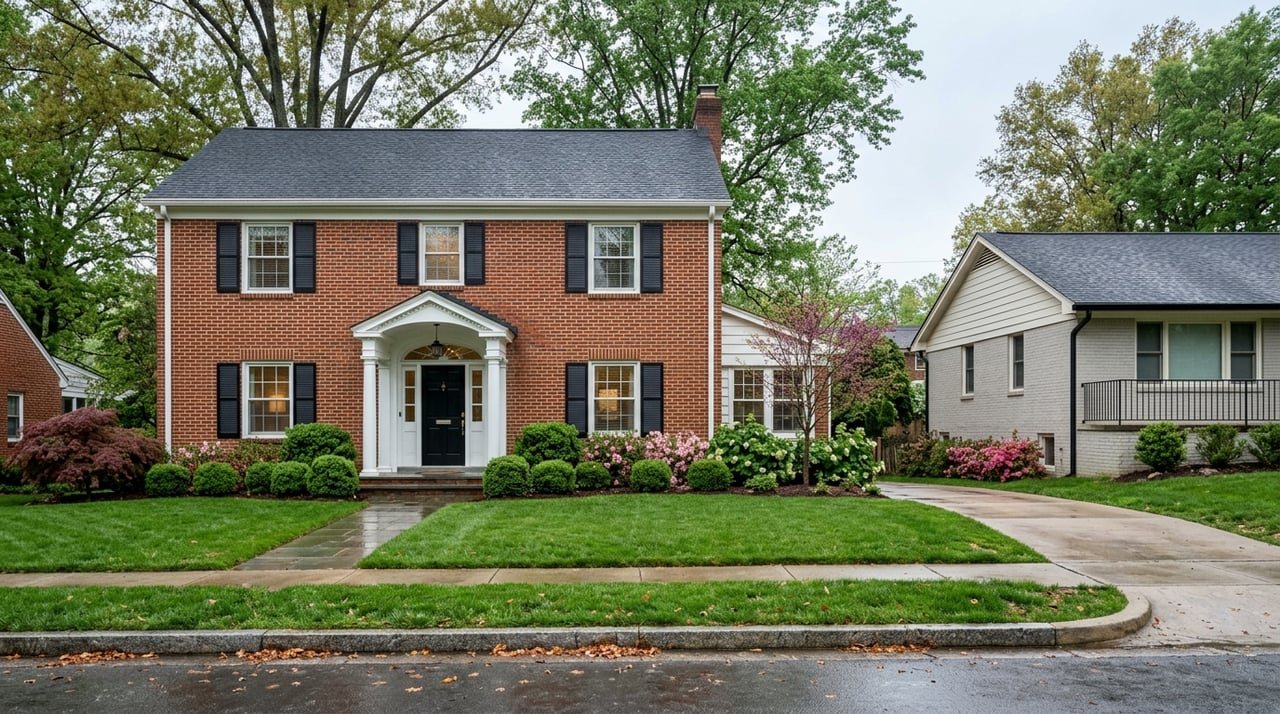
If you picture North Potomac, the most recognizable image is often the two-story suburban Colonial. These homes usually present a formal, balanced front elevation and fit naturally into the area’s subdivision layout.
Some Colonial Revival homes may include porches or porticos, which add a more welcoming front-entry feel. That said, the overall look in North Potomac is still more suburban than village-like, with homes typically set back from the road and shaped around private lots, driveways, and internal neighborhood streets.
Home Sizes Often Skew Larger
North Potomac has a notably family-sized housing stock. According to local housing data, 40.7 percent of units have four bedrooms, and 21.5 percent have five or more bedrooms.
That does not mean every home is large, but it does mean the area often appeals to buyers looking for more interior space. If your priority is extra bedrooms, flexible living areas, or room to spread out, North Potomac offers a housing profile that supports those goals.
Lot Sizes Change the Feel
One of the biggest differences from one part of North Potomac to another is lot size. Two homes may share a similar architectural style but feel very different depending on how much land surrounds them.
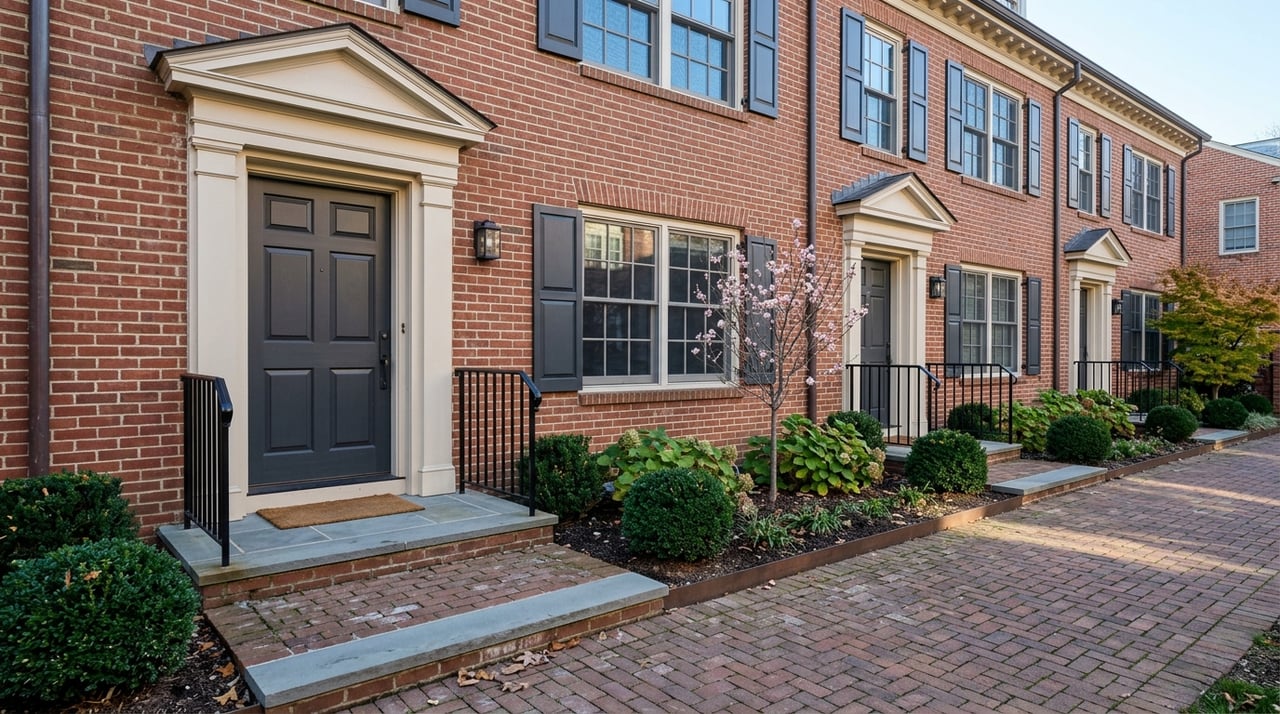
Observed listing examples show many subdivision homes on lots around a quarter acre, with sample properties at about 0.27 and 0.28 acres. Estate-style properties in some pockets can be much larger, reaching roughly 2.37 to 3.01 acres. Townhomes, on the other hand, sit on far smaller lots.
That range matters when you are deciding what kind of setting fits your lifestyle. If you want a more traditional subdivision feel, you may focus on neighborhoods with moderate lots and a tighter rhythm of homes. If you want more separation and outdoor space, certain larger-lot pockets may feel like a better match.
Neighborhood Layouts Feel Residential
North Potomac generally does not read like a grid-based town. Its layout is more often shaped by subdivisions, curving roads, and cul-de-sacs.
That pattern tends to create lower through-traffic and a more internal neighborhood feel. Instead of a central commercial core defining daily life, many residents experience North Potomac through their immediate subdivision, nearby recreation spaces, and road connections to surrounding areas.
This is part of why the community can feel different from one section to another. Your day-to-day impression may depend less on the broader ZIP code and more on whether you are in a cul-de-sac setting, a mixed detached-and-townhome community, or a larger-lot area near open space.
DuFief and Stonebridge Show the Range
Two well-known communities help illustrate how varied North Potomac can be. DuFief includes 306 single-family homes on 12 cul-de-sacs and quiet streets within 600 acres of protected woodland streams and ponds.
That description suggests a neighborhood feel centered on single-family living, internal streets, and nearby natural features. For buyers who value a tucked-in setting with a strong subdivision identity, that kind of layout can feel especially appealing.
Stonebridge offers a different mix. It includes about 779 homes, split between 403 single-family homes and 376 townhomes, along with a pool, playgrounds, lakes, and recreation fields.
Compared with a purely detached-home neighborhood, a mixed community like Stonebridge may feel more varied in housing type and more centered around shared amenities. Neither format is better across the board. It simply depends on what kind of daily environment you want.
Parks and Trails Shape Daily Life
A big part of North Potomac’s appeal comes from how closely parks and trails sit to residential areas. This is one of the strongest clues to the area’s everyday rhythm.
The Nancy H. Dacek North Potomac Community Recreation Center serves a 6.5-square-mile area with more than 8,000 households and about 24,000 residents. It sits next to the 11-acre Big Pines Local Park, adding another practical recreation anchor within the community.
For outdoor access, Muddy Branch Stream Valley Park is a major feature. It includes more than 876 acres, and the Muddy Branch Greenway Trail runs 9 miles one way, with access from Quince Orchard Road and a bridge connection to Pennyfield Lock and the C&O Canal.
The Powerline Trail adds another useful connection. This 6-mile trail links South Germantown Recreational Park with Muddy Branch Stream Valley Park in North Potomac.
Local Parks Add Convenience
Neighborhood parks also help shape the feel of North Potomac. Dufief Local Park spans 15.4 acres and includes playgrounds, tennis courts, and fields.
Quince Orchard Knolls Local Park covers 9.6 acres and includes playgrounds, courts, and ballfields. Hickory Grove Park is 10 acres and includes a dog park.
Taken together, these spaces support a lifestyle organized around trail access, recreation fields, playgrounds, and outdoor routines. In practical terms, North Potomac often feels less centered on a main street and more centered on residential neighborhoods with easy access to green space.
What Buyers Should Pay Attention To
If you are home shopping in North Potomac, it helps to look beyond the address and focus on the combination of house style, lot size, and subdivision layout. Those three factors often shape your experience more than any broad label.
As you compare options, pay attention to:
- Whether you prefer detached homes, attached homes, or a mix within the community
- Whether you want a quarter-acre subdivision lot or a larger parcel
- Whether a cul-de-sac setting feels right for your routine
- How close you want to be to trails, parks, and recreation spaces
- Whether you prefer an older split-level or split-foyer look, or a more traditional Colonial-style exterior
A calm, organized home search usually starts with knowing what kind of environment you want each day, not just how many bedrooms you need.
What Sellers Should Keep in Mind
If you are selling in North Potomac, neighborhood feel is part of your home’s story. Buyers are often comparing not just square footage, but also the setting around the home.
That means your marketing should help buyers understand where your property fits within North Potomac’s broader mix. A home in a cul-de-sac subdivision, a mixed-housing community, or a larger-lot pocket may each appeal for different reasons, and a thoughtful presentation can help those differences come through clearly.
The Bottom Line on North Potomac
North Potomac feels less like one uniform neighborhood and more like a collection of established suburban communities. The common threads are larger family-sized homes, late-20th-century architecture, subdivision layouts, mature landscaping, and convenient access to parks and trails.
If you are drawn to detached Colonials, split-levels, newer traditional homes, and residential streets with a strong suburban rhythm, North Potomac offers a lot to explore. The key is to narrow in on the version of North Potomac that best matches how you want to live day to day.
If you are thinking about buying or selling in North Potomac, Dewey Reeves can help you evaluate home style, neighborhood feel, and market position with a clear, organized approach.
FAQs
What home styles are most common in North Potomac?
- North Potomac is known for detached Colonials, split-levels, split-foyers, ranch or rambler-style homes in some pockets, and newer traditional homes built largely in the 1980s and 1990s.
What does North Potomac feel like compared with a town-center community?
- North Potomac generally feels more like a collection of suburban subdivisions than a place built around one downtown, with daily life shaped by residential streets, parks, and trails.
Are most homes in North Potomac single-family homes?
- Yes. About 66.8 percent of housing units are detached single-family homes, and 21.9 percent are attached single-family homes.
Do lot sizes vary in North Potomac neighborhoods?
- Yes. Sample listings show many subdivision homes on roughly quarter-acre lots, while some estate-style properties are significantly larger and townhomes sit on much smaller lots.
How do parks and trails affect North Potomac neighborhood feel?
- Parks and trails are a major part of daily life in North Potomac, with features like Muddy Branch Stream Valley Park, the Muddy Branch Greenway Trail, local parks, and community recreation spaces woven into the residential setting.
What should you compare when choosing a North Potomac neighborhood?
- You should compare home style, lot size, subdivision layout, housing mix, and access to parks or trails, since those factors often shape the feel of each area more than the overall community name alone.