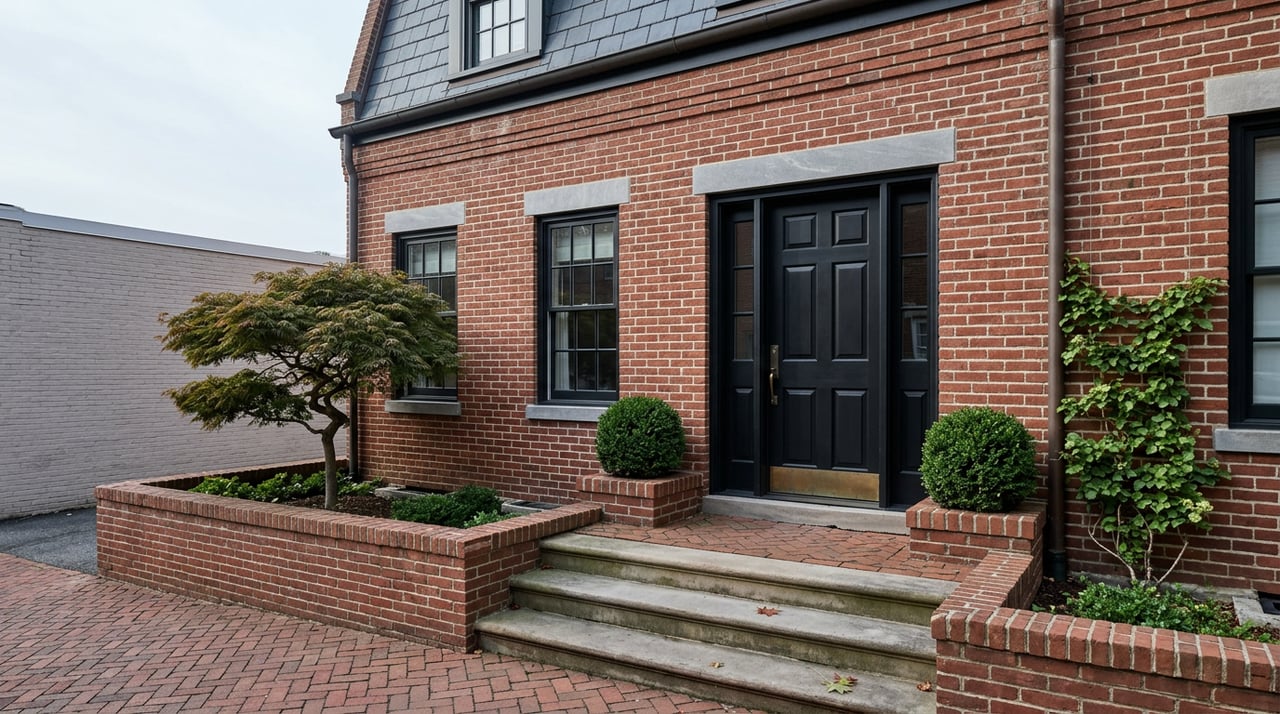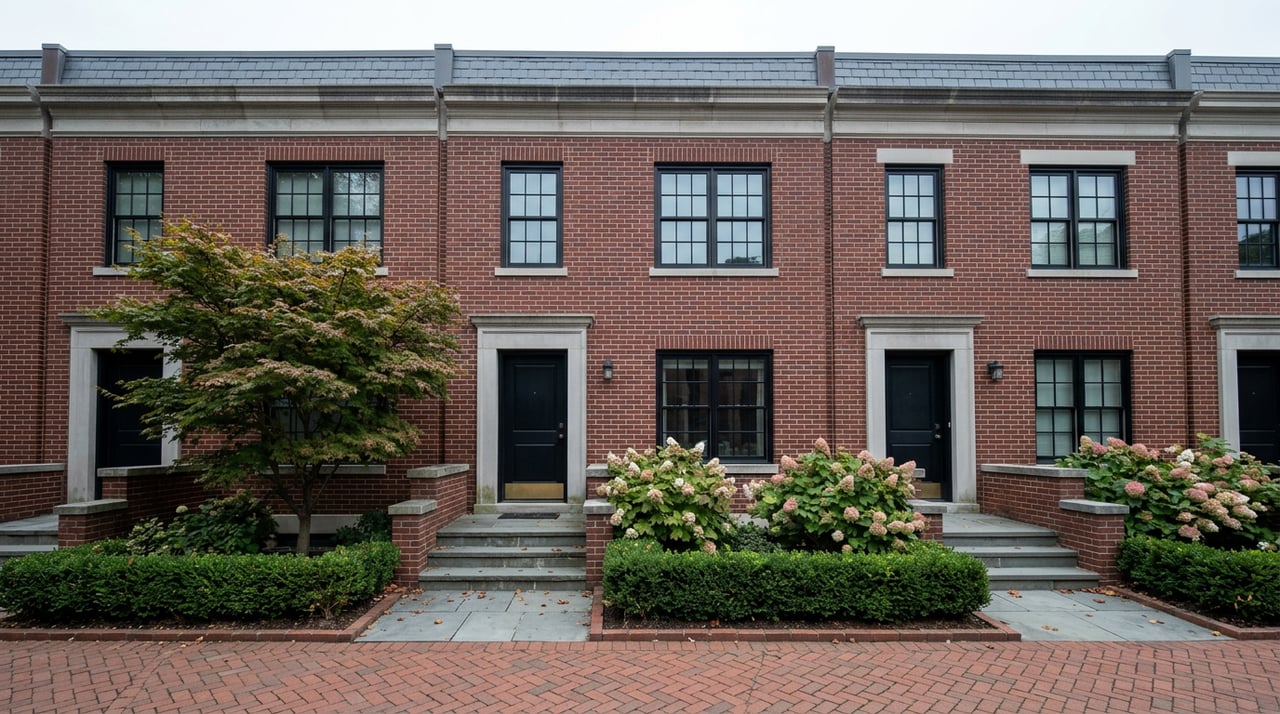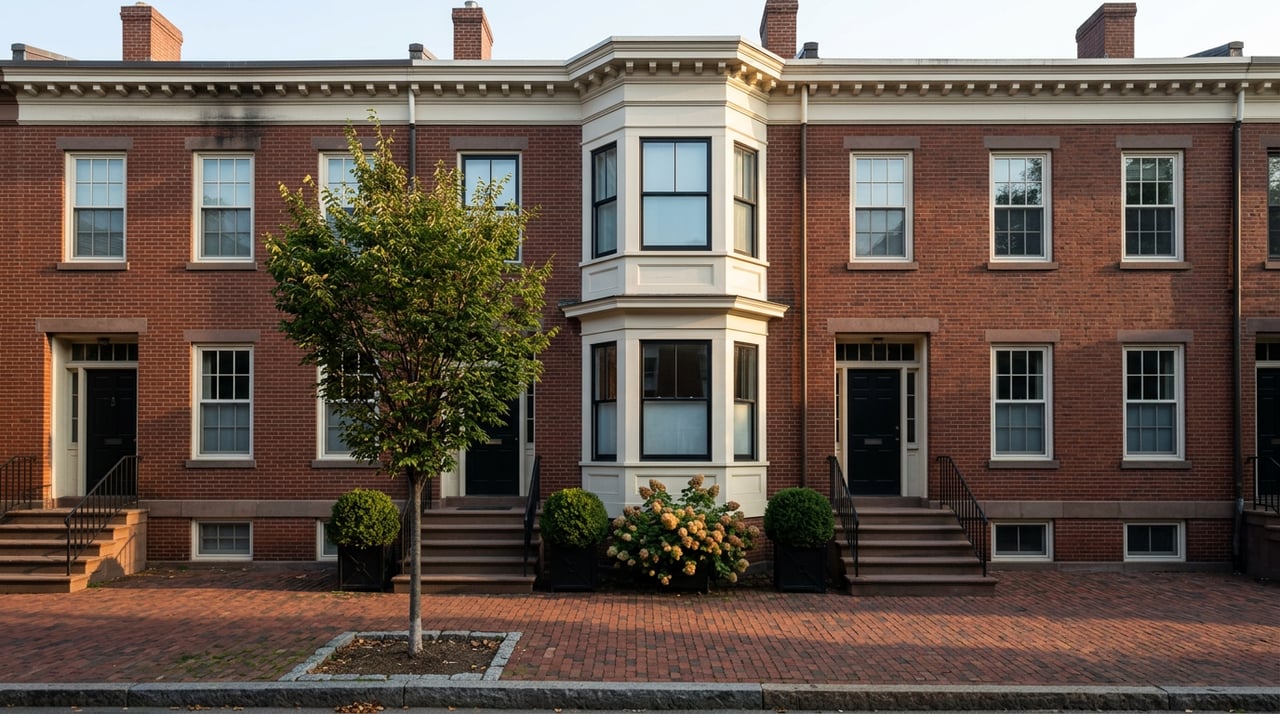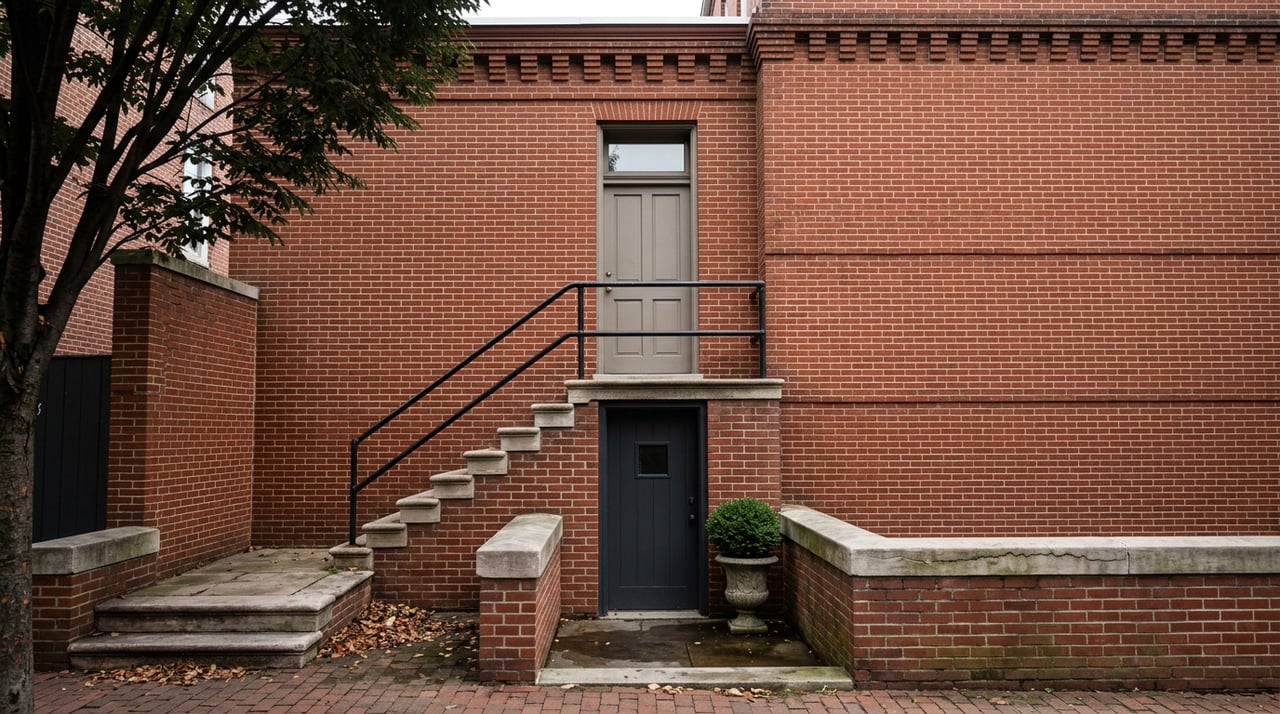
Two rowhouses sit three blocks apart in Northwest DC. Both have finished basements with a kitchenette, a separate entrance off the alley, and a tenant already paying rent. On paper, they look like the same asset. Legally, they are not close. One basement can be sold as its own unit someday. The other cannot, no matter how much money goes into it, because the zone it sits in decided that answer before the current owner ever bought the house.
That distinction rarely comes up during a showing. It shows up later, usually when a seller is pricing "income potential" into a listing, or a buyer is running numbers on a house-hack and assumes the basement will behave the way the last one did. The zoning code, not the renovation, is what actually governs whether a DC rowhouse basement generates rental income you can bank on or a rental unit you can only ever keep attached to the main house.
Two Legal Categories, One Word Apart
DC's zoning code splits basement apartments into two frameworks that sound similar and function nothing alike.
In most R zones, which cover the bulk of single-family rowhouse blocks, a basement apartment falls under Subtitle U Section 253 as an "Accessory Apartment." It can be added by right once you meet the conditions, but it carries a non-waivable owner-occupancy requirement. You have to live in either the main house or the basement unit. That rule cannot be negotiated away, and it means the basement can never be sold as a separate property. It stays legally tethered to the house above it forever.
In RF zones, which cover most of DC's actual rowhouse neighborhoods, the rule is different in a way that matters more than it sounds. RF zones don't use the accessory apartment framework at all. Under Subtitle U Section 301, they allow two principal dwelling units on one lot, commonly called a two-unit flat. There is no owner-occupancy requirement. An investor can own the building and rent both units. Getting there requires a Certificate of Occupancy, which adds an inspection step, but the path to a separately saleable basement unit runs through this zone, not the other one.
Then there's a third category that trips people up specifically in Georgetown. R-19 and R-20 zones, mapped largely there, don't get the by-right path at all. They require special exception approval from the Board of Zoning Adjustment, a process with a hearing and a timeline the other R zones skip entirely.
| Zoning Category | Framework | Owner-Occupancy Required | Can Be Sold Separately |
|---|---|---|---|
| Most R zones | Accessory Apartment (Subtitle U §253) | Yes, non-waivable | No |
| RF zones (most rowhouse blocks) | Two-Unit Flat (Subtitle U §301) | No | Yes, with Certificate of Occupancy |
| R-19 / R-20 (Georgetown) | Special Exception via BZA | Case by case | Case by case |
None of this is visible from the street. Two basements can look identical, finish out at the same price per square foot, and still land in completely different legal categories depending on which side of a block line the lot happens to fall on.
The Condo Paperwork Doesn't Fix It
The mistake that catches people furthest into a project is assuming that filing condominium documents changes the underlying zoning classification. It does not.
If a basement is legally an Accessory Apartment under an R zone, recording condo formation paperwork does not convert it into two separately saleable units. The owner-occupancy requirement travels with the use classification, not the ownership structure. An owner can spend real money on architects, permits, and a full condo filing, only to discover the basement is still legally a subordinate unit that has to stay attached to the main house. Getting around that requires a zoning variance, which is its own process, with its own hearing, and no guarantee of approval.
This is why the first question worth answering on any rowhouse with basement income ambitions is not "how much can I charge in rent," but "what zone is this lot actually in, and does that zone support the plan I have in mind." Confirming that before signing a contract, not after, is the difference between a basement that pays for itself and one that just sits there fully finished and legally stuck.
Historic District Review Adds Its Own Clock
Zoning decides what's structurally possible. Historic district status decides how long it takes to get there.
DC has 70 designated historic districts, and more than 30 of those are local neighborhood districts, according to the DC Office of Planning. Capitol Hill's is the largest residential historic district in the city, originally designated in 1973 and expanded three times since, most recently in 2015 when the Swampoodle area was added. Any exterior work visible from a public street or alley in a district like that, a new basement entrance, an areaway, a window well, needs Historic Preservation Review Board clearance before a building permit can be issued.
That review adds real time. Permit timelines for straightforward residential projects in DC generally run two to four months. Complex renovations run four to six months. Add historic district review on top, and the timeline commonly stretches another two to four months beyond that. A basement conversion that would take a few months in a non-historic RF zone can take the better part of a year in a historic district, and the delay has nothing to do with the quality of the contractor or the design. It's the review calendar itself.
There is one piece of good news buried in this. DC's Instant Permit system handles some simpler interior scopes online, which can shave time off work that never touches the exterior. That only helps if the basement plan stays entirely inside the walls. The moment a project needs a new door, a light well, or a change to the rear facade, it's back in the standard review queue.
Why the Math Matters More in the 2026 Market
This isn't an abstract zoning puzzle. It's showing up in listing prices right now, at a moment when the DC market has less room for error than it did a few years ago.
Bright MLS forecast in December 2025 that the DC region would be the only Mid-Atlantic market to see home prices decline in 2026, projecting a one percent drop to a median of roughly $616,700, with federal workforce uncertainty cited as the driver. Sales volume is still expected to rise regionally as inventory loosens, but the price cushion that used to absorb a mispriced basement conversion is thinner than it was.
Rowhouse-specific data from BrightMLS, covering closed sales across 44 DC neighborhoods in the twelve months ending July 2026, put the median rowhouse sale price at $1.1 million citywide, with Capitol Hill and Georgetown trading above that median and neighborhoods like Trinidad and Brightwood Park closing under $650,000. Days on market told a similar story of wide variation: a citywide median of 21 days masked a spread between well-priced Capitol Hill and Logan Circle rowhouses moving in under 10 days and rowhouses in slower corridors sitting 30 to 45 days or more.
That spread is exactly why the zoning question matters more this year than it did in a faster market. A basement's rental income argument only holds up if the zoning actually supports the claim being made about it. A listing that markets "income potential" on an R-zone Accessory Apartment is describing a feature that legally cannot become the separately owned unit a buyer might be picturing. In a market with longer average marketing times and a narrower price cushion, that mismatch between the pitch and the paperwork is more likely to surface during due diligence rather than get glossed over in a bidding war.
What to Check Before You Fall in Love With the Listing
A few steps, done early, prevent most of the surprises above:
- Confirm the lot's zoning designation before assuming a basement's income potential. R and RF zones sound similar and behave very differently.
- Ask specifically whether the basement's legal status is an Accessory Apartment or a two-unit flat. The difference determines whether it can ever be sold separately.
- Check historic district status early, not after signing a contract. DC's Office of Planning maintains maps of every district and its boundaries.
- Get a realistic permit timeline from a contractor who has worked in the specific zone and district, not a general estimate.
- Treat any renovation cost figure as a range with contingency built in. Mid-range DC rowhouse renovation work has run $250 to $480 per square foot in 2026, and older masonry stock regularly surfaces hidden conditions once walls come open.
A Few Direct Questions
Does finishing my basement automatically make it a legal rental? No. Finish quality has nothing to do with zoning classification. A beautifully finished basement in an R zone still carries the owner-occupancy requirement, and an unfinished basement in an RF zone can still qualify as a two-unit flat once it meets code and gets its Certificate of Occupancy.
Can I sell my basement apartment as a separate condo? Only if the zoning classification supports two principal dwelling units, which generally means an RF zone. In most R zones, the Accessory Apartment classification survives condo paperwork and keeps the units legally tied together.
Does historic district status matter if my basement work is entirely interior? Less than it would for exterior work, but it still matters the moment your scope touches anything visible from the street or alley, including a new entrance or window well. Confirm district status and discuss scope with a contractor before assuming interior-only work skips review entirely.
If you're weighing a rowhouse purchase with basement income in mind, or pricing a listing where that income has already been part of the pitch, the zoning answer is worth getting before the offer, not after. That's the kind of detail Dewey Reeves walks through with clients across DC's rowhouse neighborhoods, matching the property's actual legal standing to the numbers being discussed. Start the Conversation before you write the offer, not after the inspection turns up a surprise.